Replacing a Concrete Patio With Pavers
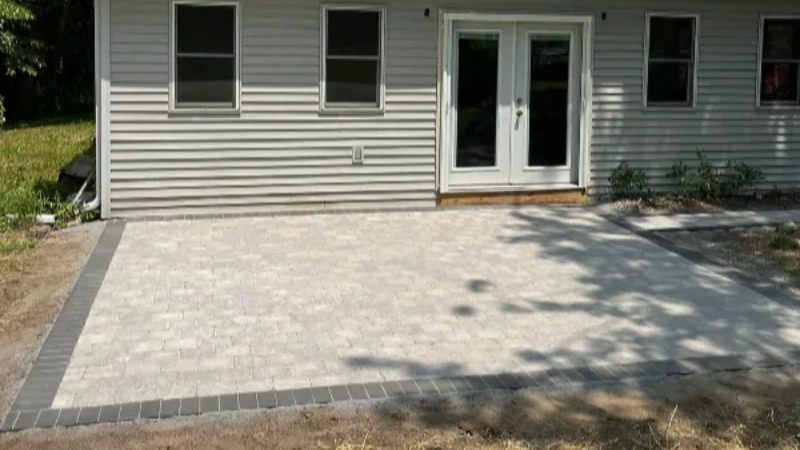
Concrete patios are common across residential properties, especially homes built decades ago. Many of these patios were poured quickly and inexpensively, often with little attention to long term drainage or soil conditions. Homeowners in Burlington and nearby communities such as Waterford, Union Grove, Lake Geneva, Elkhorn, and East Troy frequently find themselves dealing with aging concrete slabs that no longer meet their needs.
While concrete patios can last for a time, they are not flexible systems. As the ground beneath them settles, shifts, or freezes, concrete cracks, slopes, and separates. What starts as hairline cracking often turns into uneven surfaces, pooling water, and safety concerns.
Across Racine County and Walworth County, replacing concrete patios with pavers has become a common upgrade. Understanding why concrete fails, what replacement involves, and how pavers perform long term helps homeowners make smarter decisions before investing in their outdoor space.
This guide explains why concrete patios deteriorate, where problems typically show up, what the replacement process involves, and why professionally installed paver patios are a better long term solution.
Why Concrete Patios Crack, Shift, and Fail Over Time
Concrete is a rigid material poured as a single slab. While strong, it does not adapt well to movement below the surface.
Soil conditions, moisture, and freeze thaw cycles all work against concrete patios in southeastern Wisconsin.
Common Problems With Older Concrete Patios
Most failing concrete patios show one or more of the following issues:
-
- Cracks spreading across the surface
- Sections that have sunk or lifted
- Uneven edges creating trip hazards
- Water pooling near foundations or doors
- Surface discoloration and flaking
Once cracking and movement begin, concrete rarely stabilizes on its own.
Why Concrete Is Not a Flexible Outdoor Surface
Concrete patios commonly fail because:
-
- They are poured directly over poorly prepared subgrade
- Drainage is often ignored or undersized
- Frost heave lifts sections unevenly
- Settling causes permanent slope changes
- Repairs do not address the underlying soil issues
Concrete can be patched, but patches rarely blend well and do not stop future movement.
Where Problematic Concrete Patios Are Commonly Found
Concrete patios were widely used in both front and backyard spaces, especially during earlier construction booms.
Typical Locations Around the Home
Homeowners most often encounter failing concrete patios:
-
- Directly behind the home at walkout doors
- Adjacent to garages or driveways
- In backyard entertaining areas
- Near foundations where drainage is critical
- Under decks or pergolas
These areas experience constant moisture exposure and soil movement.
Why These Areas Are High Risk
Patios near foundations and downspouts collect water. When drainage is poor, soil beneath the slab softens, freezes, and shifts. Over time, this leads to cracking and uneven surfaces that cannot be corrected without removal.
Signs Your Concrete Patio Should Be Replaced
Concrete patios rarely fail all at once. Most issues develop gradually.
Structural and Surface Warning Signs
Replacement is typically the right option if you notice:
-
- Large or spreading cracks
- Sections sloping toward the house
- Uneven joints or raised edges
- Settling that creates standing water
- Adjacent walkways or steps shifting
These signs indicate that the base below the patio has failed.
Drainage and Safety Concerns
Many concrete patios contribute to drainage problems, including:
-
- Water pooling against the foundation
- Ice buildup during winter
- Slippery or uneven walking surfaces
Once drainage and slope are compromised, replacement becomes the safest solution.
Why Replacement Is Better Than Repair
Concrete patio repairs are often temporary and cosmetic.
Limitations of Repairing Concrete Patios
Common repair attempts include:
-
- Crack filling and sealing
- Mudjacking or foam lifting
- Surface resurfacing
While these methods may improve appearance short term, they do not correct poor base preparation or drainage problems.
Benefits of Full Replacement With Pavers
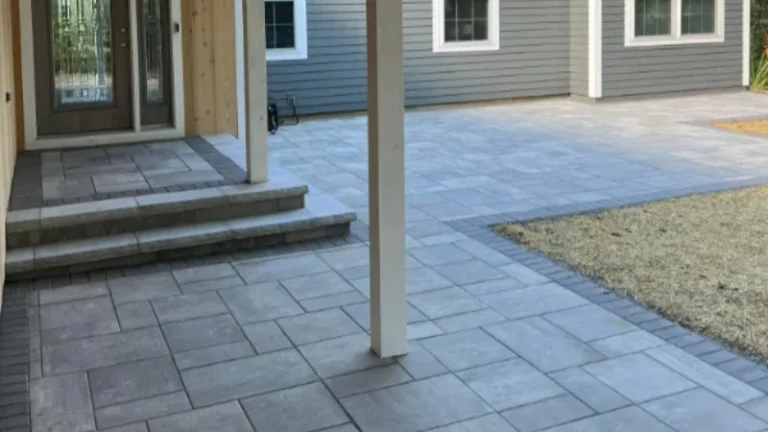
Replacing a concrete patio allows the entire area to be rebuilt correctly, addressing drainage, layout, and long term performance from the ground up.
What the Replacement Process Involves
Replacing concrete with pavers is more involved than simply laying new materials over the old slab.
Demolition and Removal
The process typically includes:
-
- Breaking up and removing the existing concrete patio
- Hauling away all concrete debris
- Excavating the area to proper depth
- Reshaping the space to improve layout and drainage
This step allows full control over the finished design.
Proper Base Preparation and Drainage
A long lasting paver patio depends on:
-
- Excavating to the correct depth
- Installing compacted granular base materials
- Proper grading away from structures
- Drainage solutions where needed
Skipping base preparation leads to the same problems concrete patios experience.
Installing the Paver System
Once the base is prepared, the patio is built using:
-
- Bedding sand or setting materials
- Precisely placed pavers
- Edge restraints to prevent movement
- Joint sand to lock the surface together
Each layer plays a role in long term stability.
Why Paver Patios Are a Better Long Term Solution
Pavers are designed to work with soil movement, not against it.
Advantages Over Concrete Patios
Paver patio systems:
-
- Flex with freeze thaw cycles
- Allow water to drain through joints
- Do not crack like concrete slabs
- Can be repaired without replacing the entire surface
- Provide a more refined, finished appearance
They are systems built for longevity, not quick installation.
Unilock Paver Products
Many homeowners choose Unilock pavers for their durability, color consistency, and design options. These products are manufactured to strict standards and perform well in Wisconsin’s climate.
Working with a Unilock Authorized Contractor ensures the patio is installed according to manufacturer specifications and proven best practices.
Cost and Planning Considerations
Replacing a concrete patio with pavers is an investment, but one that improves both function and property value.
When Replacement Makes the Most Sense
Replacement is usually the right choice when:
-
- Concrete is cracked or uneven
- Drainage issues are present
- The patio no longer fits how the space is used
- Safety or appearance is a concern
Reviewing the landscape pricing guide helps homeowners understand grading, drainage, and planting costs that may be involved, while the hardscape pricing guide provides context for paver patio construction and related work.
Common Misconceptions Homeowners Have
Concrete Can Be Permanently Repaired
Concrete repairs do not stop soil movement. Cracks and shifting almost always return.
Pavers Are Just Decorative
Pavers are structural systems when installed correctly. They are designed for load, drainage, and long term use.
This Is a DIY Friendly Project
Proper excavation, base compaction, and drainage require professional equipment and experience. Mistakes lead to costly failures.
When Professional Evaluation Is the Right Call
Determining proper excavation depth, base materials, drainage needs, and layout changes requires experience. A professional evaluation ensures the patio is built correctly the first time.
Local soil conditions and weather patterns across Racine and Walworth Counties directly impact how patios should be designed and installed.
Local Experience and Long Term Patio Solutions
Boulder Ridge Landscaping replaces failing concrete patios with professionally installed paver systems throughout southeastern Wisconsin. Their team regularly removes cracked and uneven concrete slabs and installs durable paver patios designed for long term performance.
As a Better Business Bureau accredited company and Unilock Authorized Contractor, Boulder Ridge Landscaping focuses on proper excavation, drainage, and craftsmanship on every project.
In addition to concrete patio replacement, Boulder Ridge Landscaping provides:
Replacing a concrete patio improves safety, appearance, and usability while eliminating ongoing maintenance issues.
If your concrete patio is cracked, sloping, or no longer working for your home, schedule a professional evaluation and estimate to explore a properly built paver solution tailored to your property.