Landscaping a Sloped Side Yard the Right Way
Properly landscaping a sloped side yard is one of the most overlooked challenges homeowners face, especially when the neighboring property sits higher than yours. In communities like Burlington, Waterford, Union Grove, Lake Geneva, Elkhorn, and East Troy, it is common to see narrow side yards that slope aggressively toward the home, collect runoff, and offer little to no usable space.
These areas are often left unfinished because they feel difficult to access, awkward to design, or too expensive to fix. Over time, though, unmanaged side yard slopes can cause drainage problems, soil erosion, foundation concerns, and ongoing maintenance headaches. What starts as an unused strip of land can quietly turn into a long term liability.
This guide explains why sloped side yards fail, how professional landscaping and hardscaping solutions can transform them, and what homeowners should consider before investing in improvements. The goal is not decoration, but long term function, stability, and peace of mind.
Why Sloped Side Yards Are So Challenging
Side yards are usually narrow, shaded, and confined by property lines, fences, or neighboring structures. When that space is also sloped, the challenges multiply.
Common Issues With Sloped Side Yards
Most problematic side yards share a few traits:
-
- Steep grade that funnels water toward the home
- Higher neighboring property directing runoff downhill
- Limited access for mowing or maintenance
- Poor soil stability and erosion after rain
- No safe walking path or usable surface
Because these areas are out of sight, they are often ignored until water problems or soil movement become obvious.
Why DIY Fixes Rarely Hold Up
Temporary solutions like dumping mulch, adding decorative stone, or planting groundcover rarely solve the underlying issues. Without addressing grading and drainage, water continues to move downhill, washing materials away and saturating soil near the foundation. This is where professional evaluation becomes critical.
How Water Runoff Impacts Your Home
Water is the single biggest factor in side yard failure. When a neighboring property sits higher, gravity does the rest.
The Hidden Risk of Uncontrolled Runoff
Unmanaged runoff can lead to:
-
- Saturated soil along the foundation
- Basement moisture or water intrusion
- Washed out mulch and plantings
- Icy conditions during winter
- Long term soil settlement
Side yards often become the primary drainage path for multiple properties, even if unintentionally.
Why Drainage Must Be Part of the Design
Proper drainage solutions such as grading adjustments, drain tile, and controlled discharge points are essential. Boulder Ridge Landscaping regularly integrates drainage improvements alongside retaining walls, walkways, and planting plans to prevent future problems rather than just covering them up.
Creating Usable Space With Retaining Walls
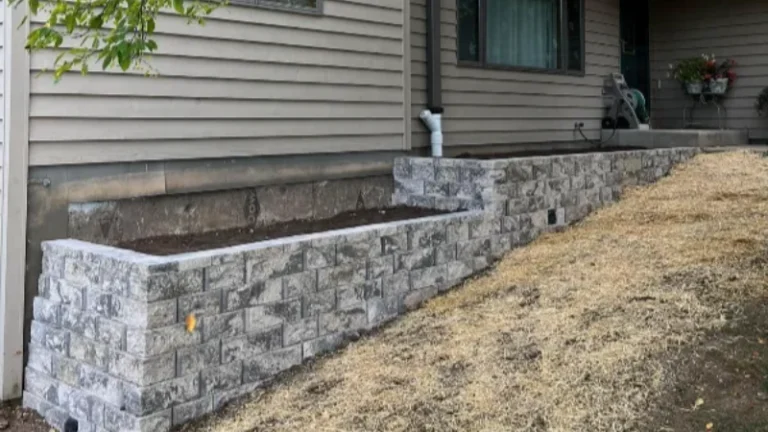
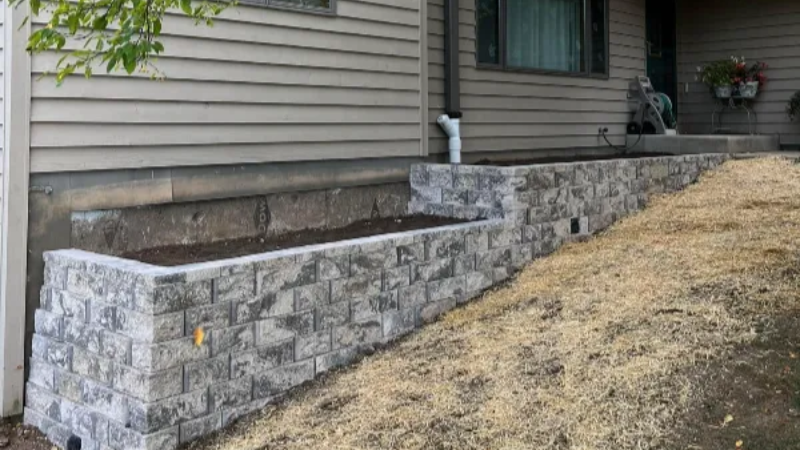
One of the most effective ways to improve a sloped side yard is by installing a segmental block retaining wall to carve a straight, stable edge into the slope.
What a Retaining Wall Accomplishes
A properly built retaining wall can:
-
- Reduce the steepness of the slope
- Create level ground for access or pathways
- Control soil movement and erosion
- Redirect water safely away from the home
- Increase overall usable space
This is especially important in tight side yards where every foot of space matters.
Why Segmental Block Systems Matter
Unlike timber or landscape tie walls, segmental block retaining walls are engineered systems designed for long term soil retention. As a Unilock Authorized Contractor, Boulder Ridge Landscaping installs retaining walls that are designed to flex with freeze thaw cycles and allow proper drainage behind the wall, reducing pressure and extending lifespan.
Drainage Solutions That Work With the Landscape
Retaining walls alone are not enough. Drainage must be designed as part of the overall solution.
Common Drainage Components Used in Side Yards
Professional drainage systems often include:
-
- Drain tile behind retaining walls
- Gravel backfill to relieve water pressure
- Surface grading to control flow direction
- Proper outlet locations away from structures
These components work together to manage water before it becomes a problem.
Why Poor Drainage Causes Structural Issues
Without drainage, water builds pressure behind walls and in the soil. Over time, this leads to wall movement, soil failure, and foundation stress. Addressing drainage early prevents expensive repairs later.
Pathway Options for Sloped Side Yards
Once the slope is stabilized, adding a pathway makes the side yard functional instead of forgotten.
Gravel Pathways for Budget Conscious Projects
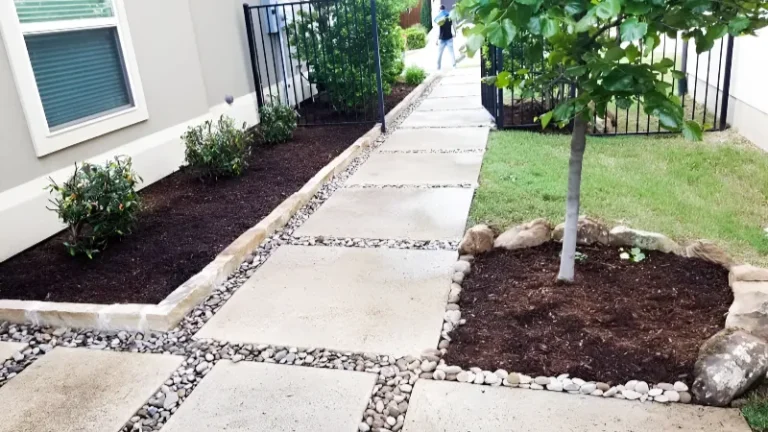
Gravel walkways are a practical option when budgets are limited. They allow water to pass through while creating a defined walking surface. However, proper edging and base preparation are still required to prevent shifting.
Paver Pathways for Long Term Value
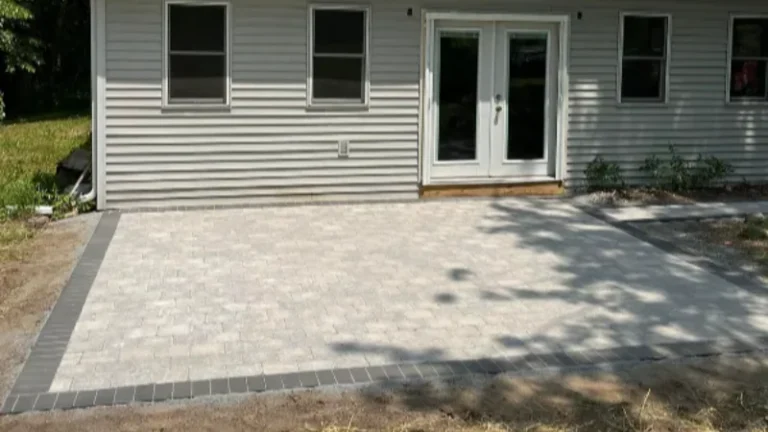
Paver walkways provide a more permanent and finished solution. When installed correctly, they offer:
-
- Stable footing year round
- Improved drainage control
- Clean visual separation from planting areas
- Easy access for maintenance
Many homeowners choose to coordinate side yard walkways with other hardscape features, such as patios or front walkways, creating a cohesive look across the property.
Planting Considerations for Sloped Side Yards
Plants play a supporting role in stabilizing soil and improving appearance, but they must be chosen carefully.
What Works Well on Slopes
Successful side yard plantings typically include:
-
- Deep rooted shrubs for erosion control
- Shade tolerant perennials
- Low maintenance groundcovers
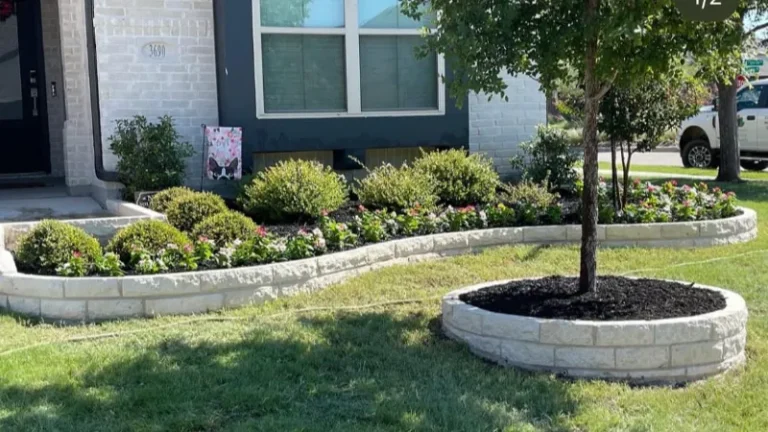
- Mulch and stone combinations for moisture control
Planting without addressing grading and drainage often leads to failure, regardless of plant choice.
Why Planting Comes After Structural Work
Retaining walls, grading, and drainage should always come first. Plantings installed before these improvements are often disturbed or destroyed during construction, leading to unnecessary replacement costs.
Cost and Planning Considerations
Landscaping a sloped side yard is an investment, but one that protects the home and improves property value.
Understanding the Scope of Work
Costs vary based on:
-
- Slope severity
- Wall height and length
- Drainage requirements
- Access limitations
- Material selections
Reviewing the Landscape Pricing Guide helps homeowners understand grading, drainage, and planting costs, while the Hardscape Pricing Guide provides context for retaining walls and walkways.
Why Phased Projects Can Make Sense
Some homeowners choose to complete structural work first, then add pathways or plantings later. A professional plan ensures each phase builds toward a finished result without rework.
Common Misconceptions Homeowners Have
It’s Just a Narrow Strip, It Doesn’t Matter
Even small side yards can direct significant water toward a home. Ignoring them often leads to larger issues elsewhere on the property.
Plants Alone Will Fix the Problem
Plants cannot stop water movement or soil pressure. Structural solutions are required before plantings can succeed.
Any Wall Will Do
Improperly built walls fail quickly. Engineering, base preparation, drainage, and reinforcement determine long term performance.
When Professional Evaluation Is the Right Call
Sloped side yards involve grading, drainage, and structural considerations that are difficult to assess without experience. Soil conditions, wall height limits, and water flow patterns all matter.
Local conditions across Racine County and Walworth County influence how side yard solutions should be designed. A professional evaluation helps identify the safest and most cost effective approach.
Local Experience With Sloped Side Yard Solutions
Boulder Ridge Landscaping provides complete landscape and hardscape solutions for sloped side yards throughout southeastern Wisconsin. Their team designs and installs retaining walls, drainage systems, walkways, and plantings that work together as a single system.
As a Better Business Bureau accredited company and Unilock Authorized Contractor, Boulder Ridge Landscaping focuses on durable construction, proper drainage, and clean, finished results.
In addition to sloped side yard projects, Boulder Ridge Landscaping offers:
A properly landscaped side yard protects your home, improves accessibility, and eliminates ongoing maintenance frustrations.
If your side yard slopes toward your home or feels unusable, schedule a professional evaluation and estimate to explore long term solutions built to last.